View Pass Options


Many people living with Lipedema spend years trying to understand what is happening to their body.
One of the biggest challenges is that Lipedema is often confused with obesity or lymphedema, even though these are very different conditions.
Because the symptoms can overlap in some ways, it can be difficult to know which condition may be responsible for swelling, fat accumulation, or changes in body shape.
Understanding the differences between Lipedema, obesity, and lymphedema can help people recognize patterns earlier and begin seeking appropriate medical guidance.
What Is Lipedema?
Lipedema is a chronic disorder of fat distribution that primarily affects women.
It causes abnormal accumulation of fibrotic fat tissue, most commonly in the:
• hips
• thighs
• legs
• buttocks
• sometimes the arms and torso
Unlike typical body fat, Lipedema tissue often develops symmetrically on both sides of the body and may feel painful, tender, or heavy.
Key characteristics of Lipedema often include:
• fat that does not respond normally to diet or exercise
• symmetrical fat accumulation in limbs
• easy bruising
• heaviness or tenderness in affected areas
• swelling that can worsen over time
In later stages, Lipedema can also increase the risk of secondary lymphedema when lymphatic drainage becomes compromised.
What Is Obesity?
Obesity is a metabolic condition involving excess body fat throughout the body, typically caused by a combination of factors such as energy balance, hormones, genetics, and lifestyle.
Unlike Lipedema, obesity usually presents with generalized weight gain, meaning fat accumulates across many areas of the body rather than specific patterns.
Common characteristics of obesity include:
• fat distributed across the entire body
• weight gain that may respond to diet and exercise
• metabolic factors such as insulin resistance
• increased risk of conditions like diabetes and heart disease
While Lipedema and obesity can occur together, they are not the same condition.
Many women with Lipedema maintain healthy diets and active lifestyles yet still experience disproportionate fat accumulation.
What Is Lymphedema?
Lymphedema is a condition caused by impaired lymphatic drainage, leading to fluid buildup and swelling in the body.
It often affects:
• arms
• legs
• hands
• feet
Unlike Lipedema, lymphedema swelling is usually caused by fluid accumulation rather than fat tissue.
Lymphedema may develop after:
• surgery or lymph node removal
• radiation therapy
• injury or infection
• congenital lymphatic abnormalities
Over time, untreated lymphedema can lead to tissue thickening and changes in the skin.
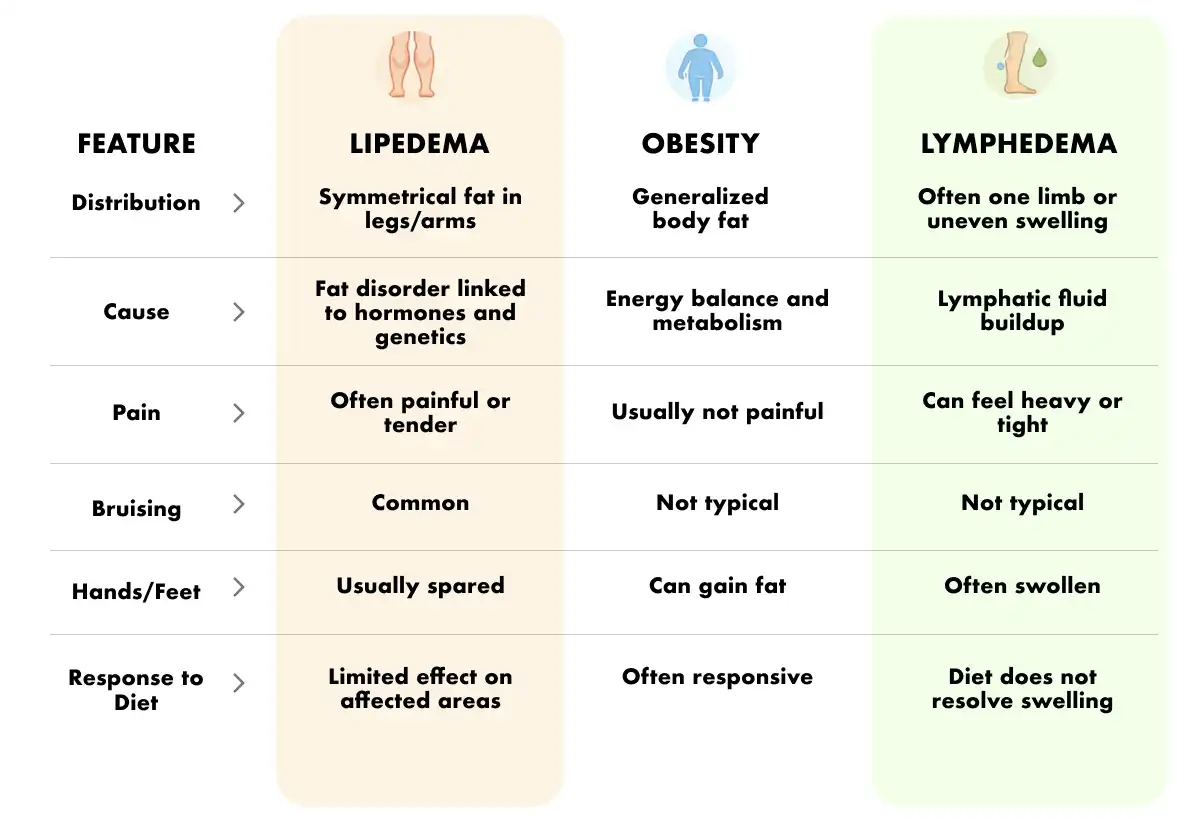
Key Differences Between the Conditions
While these conditions can sometimes appear similar, several characteristics help differentiate them.
Why Misdiagnosis Happens
Lipedema is still under-recognized in many areas of medicine, which means many patients are initially told their symptoms are related to weight gain or lifestyle.
Because the condition develops gradually and often appears during hormonal transitions—such as puberty, pregnancy, or menopause—it can easily be mistaken for other causes.
Many people spend years trying different diets, exercise programs, and treatments before receiving the correct diagnosis.
Awareness is improving, but education remains one of the most important tools for early recognition.
When Lipedema and Lymphedema Occur Together
In more advanced stages of Lipedema, the lymphatic system can become overwhelmed.
When this happens, patients may develop Lipo-Lymphedema, a condition where Lipedema fat accumulation is combined with lymphatic fluid retention.
This is why early awareness and appropriate care strategies can be important in helping manage progression.
Understanding Your Symptoms
If you are experiencing unexplained changes in fat distribution, swelling, or persistent heaviness in your limbs, it may be helpful to speak with a healthcare professional familiar with Lipedema and lymphatic conditions.
Education and awareness can help patients better understand their bodies and explore appropriate care options.
The 2026 Lipedema Summit takes place June 10–12, 2026, bringing together clinicians, researchers, surgeons, therapists, and patient advocates for three days of expert conversations and education.
The event is free to attend during the live broadcast, making it accessible to anyone seeking trustworthy information about Lipedema.
Register for the Lipedema Summit

We only send good emails. Unsubscribe anytime.













Lipedema Summit is produced by FullCircleMedia.co in collaboration with The Trail to Health and This Healthy Life Podcast.
Copyright © 2026 | Lipedema Summit. All rights reserved.